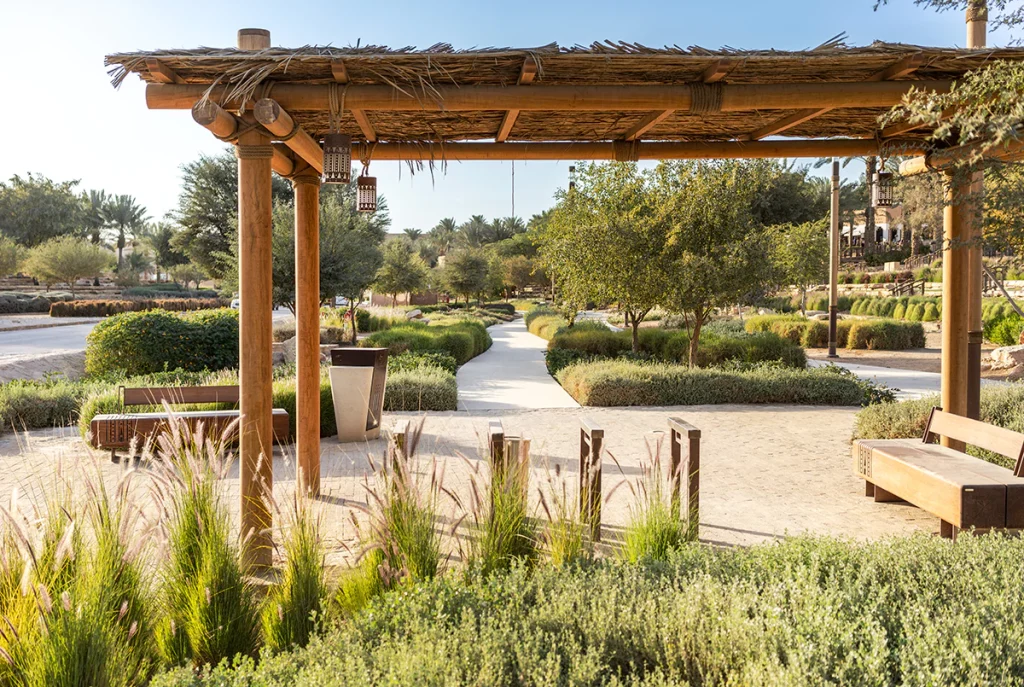
Cultural context, material honesty and ecological resilience take centre-stage at the Desert Architecture Forum (DAF) in Riyadh.
Authentic landscapes are not nostalgic reconstructions. They are contemporary interpretations of local context, shaped by history, culture and environment, yet responsive to the needs of the present.
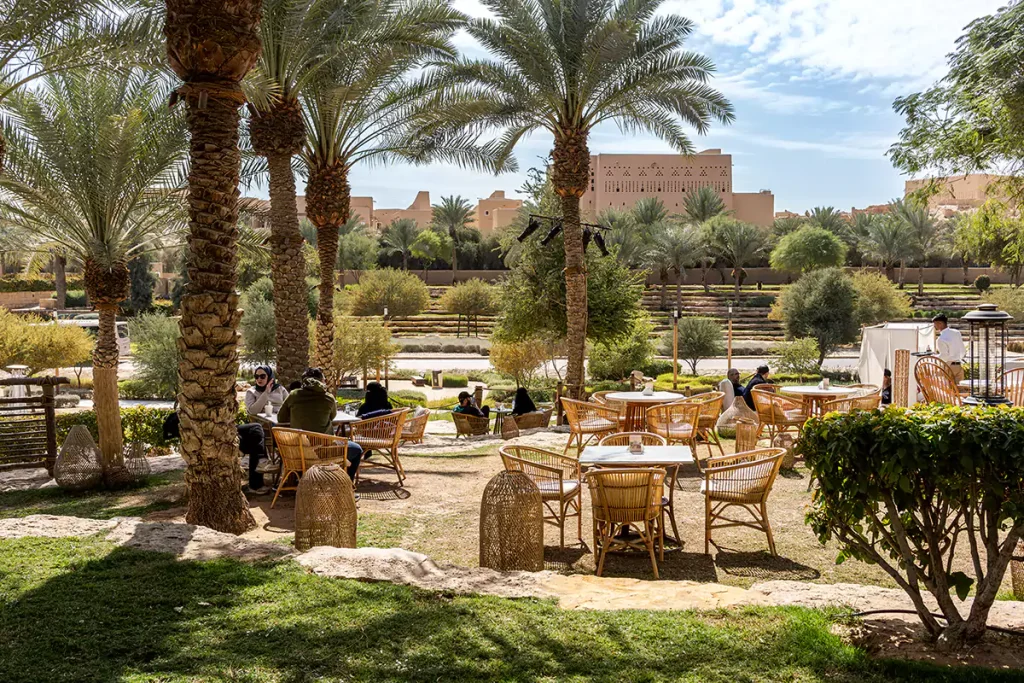
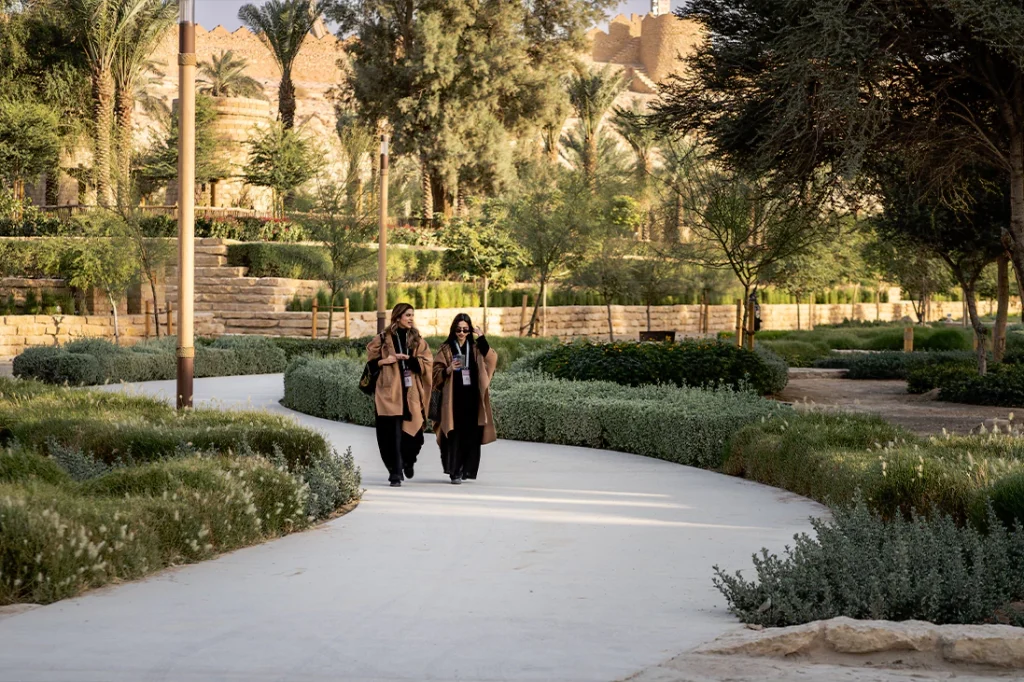
Riyadh’s Wadi Hanifah is a historic valley that once sustained the city’s early communities. By the late twentieth century, it had become a polluted channel filled with debris and damaged by unmanaged stormwater. Years of unregulated growth had harmed its ecology and erased much of its social and cultural value. The city’s restoration project set out to change that. Its aim was to clean the water, bring back the vegetation and reconnect the wadi to the life of the city.
When I was in Riyadh speaking at the Desert Architecture Forum (DAF) 2025 last month, I referenced the Wadi was given as an example of one of the city’s most recognisable landscapes, and a reminder that the desert environment can be both productive and beautiful when understood on its own terms.
When we talk about identity in landscape design, we shouldn’t think of it as something we apply to a place. Identity doesn’t come from decoration or imitation. It comes from reading the site carefully, from the climate, the geology, the way people use space and the stories connected to it. That’s where authenticity begins.
In desert environments, that relationship is very clear. Every part of the landscape has to work. Water sustains life and cools us down. Shade is both comfort and social infrastructure. Planting is about survival and memory. So when we talk about resilience here, we have to think about ecological resilience and cultural resilience together.
The wadi as teacher
Wadi Hanifah shows what this means in practice. It’s not a single project but a living system of soil and rock, water and human activity. Reviving it meant looking carefully at what aspects of the system worked in harmony, like the seasonal flooding, the groves of palms, the informal paths and agricultural terraces. The aim was not to redesign the valley but to help it function again. It had to hold water, release it, and regenerate.
That is the principle: intervene lightly but with a clear understanding of the system you are rejoining.
To design with identity doesn’t mean repeating the past. It means understanding the logic behind traditional forms and translating it for today. Too often, projects in arid regions try to import the idea of ‘lushness’ from somewhere else. It may look attractive, but it rarely belongs.
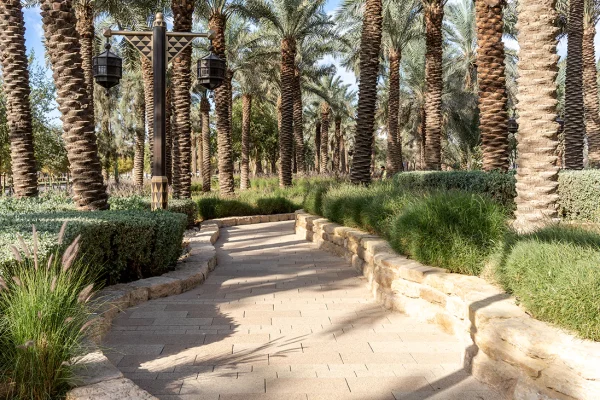
Authenticity comes from materials and patterns that make sense locally. Stone that manages heat, screens that filter light, and courtyards that gather air. These are all practical responses that have evolved over centuries. When we understand their purpose, we can adapt them in new ways without losing their meaning.
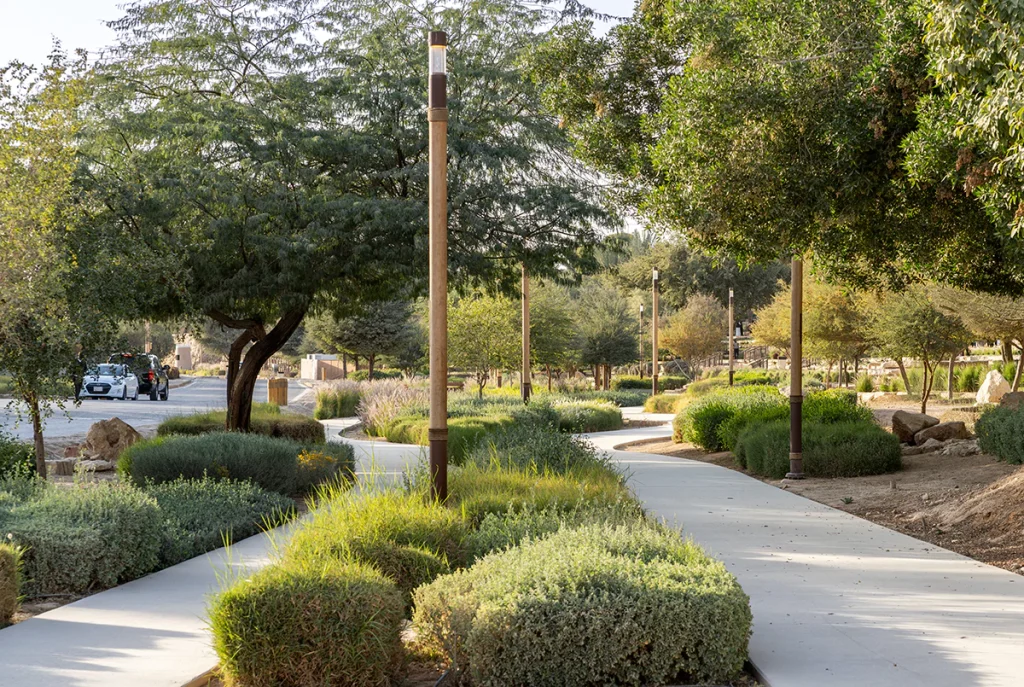
Concealing flood resilience functionality in plain sight through careful use of materials. Alessandro Merati (c) Cracknell.
Identity also comes through detail. A pavement that drains properly, a joint that is resolved, or a wall that weathers well says as much about a place as any big gesture. Small, well-considered details give a landscape integrity.
Landscapes last when they support real activity: markets, prayer spaces, evening walks, quiet places to sit. These make a design part of everyday life. Flood basins that also act as vibrant parks or bustling urban coastal edges shaped to deal with wind and tide are examples of resilience expressed through use.
Planting follows the same approach. A restrained palette lets the form, light and topography do much of the work. Plants like the sidr tree (Ziziphus spina-christi) or the date palm carry meaning and memory as well as function. Maintenance is part of the design process too; a landscape cannot claim authenticity if it cannot be maintained.
A shared language of place
These days, design moves quickly across regions, but meaning still depends on locality. Our role as designers is often to translate global expectations into forms that make sense where they are built. Authenticity is a process of research, dialogue and testing.
Landscapes tell stories if we let them. In Wadi Hanifah, that story was already there in the terraces, the palms and the rhythm of seasonal water. The design simply made it visible again. When we listen carefully to what a place is already saying, we create landscapes that don’t have to declare their identity. They show it, and people recognise it as their own.